Overview of the Digestive System
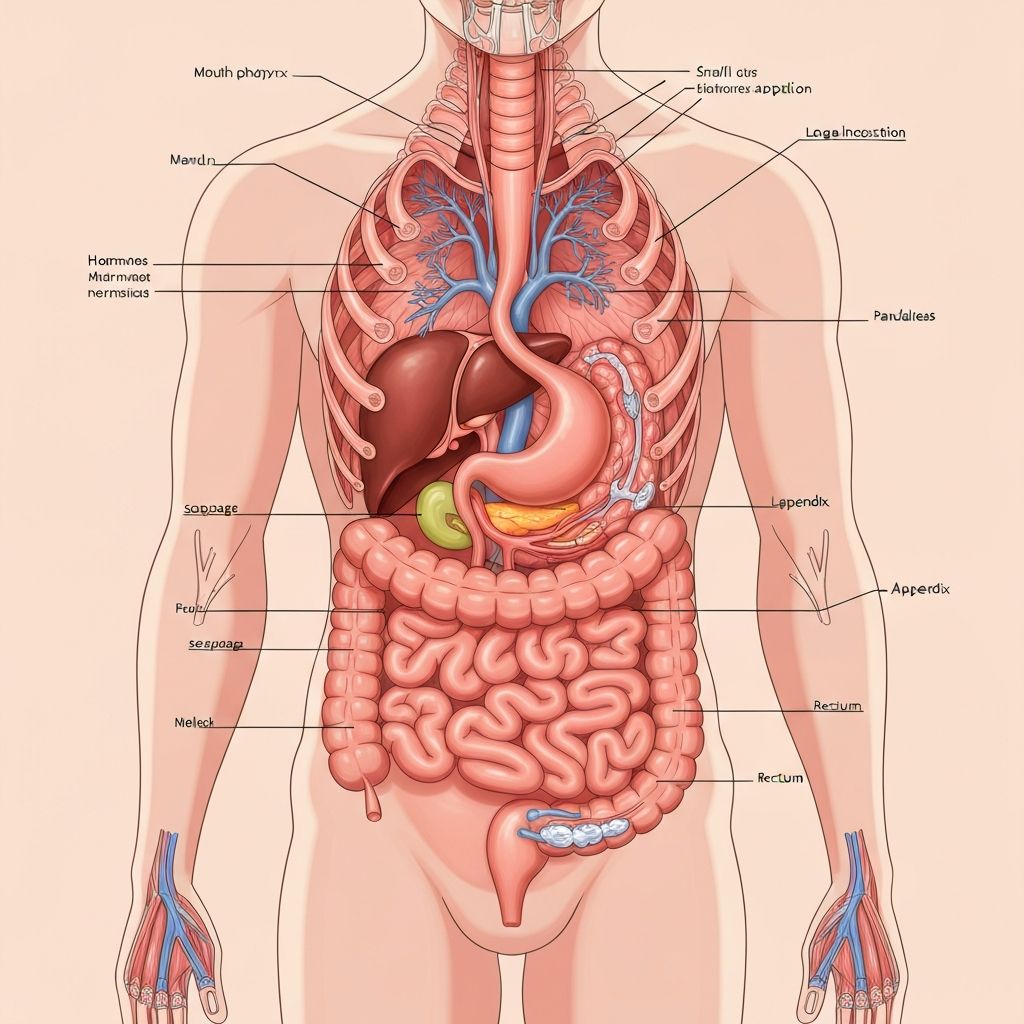
Digestion is a complex biochemical process that breaks down food into absorbable components. This process involves mechanical breakdown, enzymatic reactions, and controlled movement of food through the gastrointestinal tract.
Enzymatic Breakdown of Nutrients
Digestive enzymes catalyze the breakdown of macronutrients into usable components:
- Carbohydrate Digestion: Enzymes including amylase break complex carbohydrates and disaccharides into glucose for absorption
- Protein Digestion: Proteases cleave peptide bonds in proteins to produce amino acids and dipeptides
- Fat Digestion: Lipases break triglycerides into fatty acids and monoglycerides; bile salts emulsify fats for enzyme access
The Role of the Stomach
The stomach performs both mechanical and chemical functions in digestion. Gastric acid denatures proteins and activates proteolytic enzymes, while muscular contractions mix food with gastric secretions to form chyme, a semi-liquid mass ready for small intestinal absorption.
Small Intestine: Primary Site of Absorption
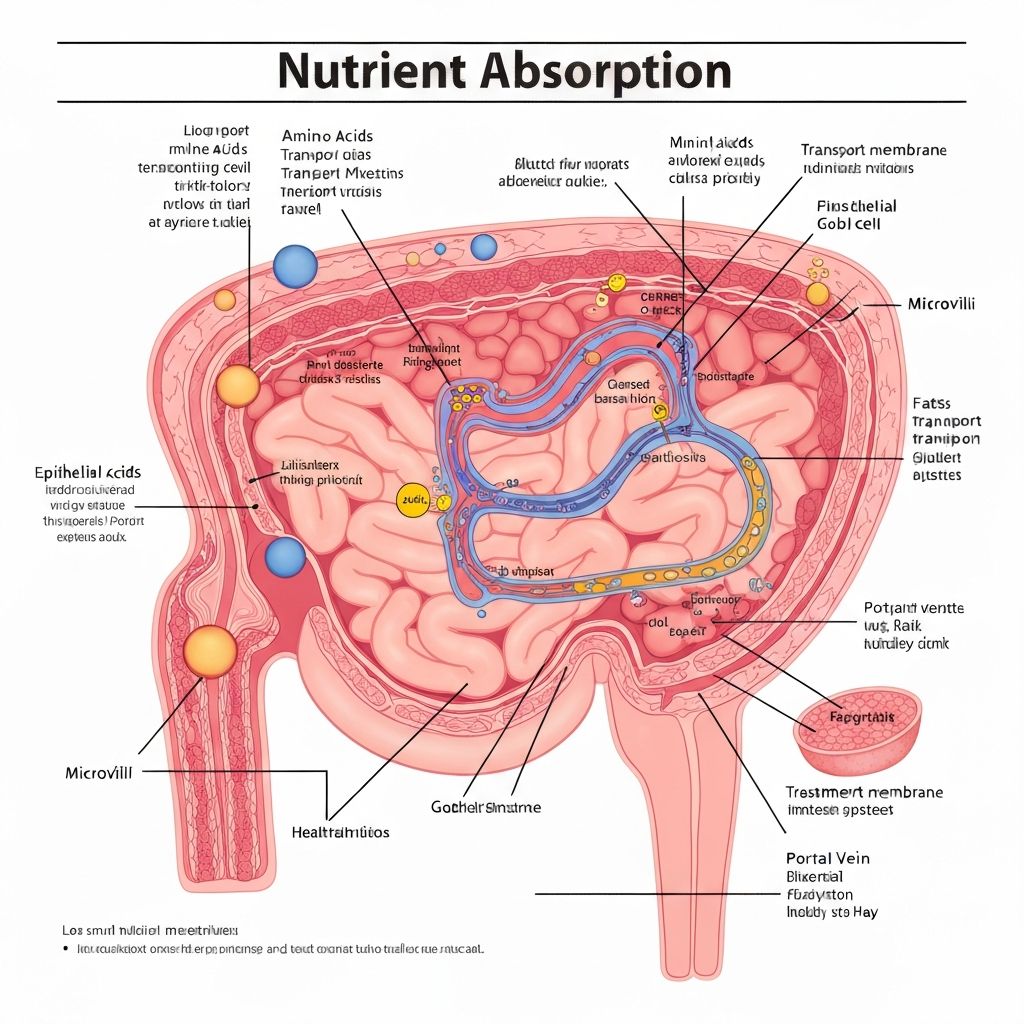
The small intestine is the primary location of nutrient absorption. The specialized epithelium features microvilli that dramatically increase surface area for absorptive processes:
- Glucose and amino acids are absorbed through active transport mechanisms
- Fatty acids and monoglycerides are packaged into lipoproteins for absorption
- Micronutrients are absorbed through various transport mechanisms specific to each nutrient
Intestinal Barrier Function
The intestinal epithelium serves as a selective barrier that controls nutrient absorption while preventing entry of pathogens and large molecules. This barrier function is essential for maintaining nutritional status while protecting overall health.
Factors Influencing Nutrient Bioavailability
Nutrient absorption is influenced by multiple factors beyond the nutrient content of food:
- Food composition and nutrient interactions
- Digestive enzyme production and activity
- Intestinal health and permeability
- Individual metabolic variation
- Interactions with medications or supplements
Nutrient Transport and Utilization
Following absorption, nutrients are transported to tissues where they are utilized for energy production, cellular repair, and metabolic regulation. The efficiency of these processes depends on adequate absorption of all necessary nutrients.
Conclusion
Digestion and nutrient absorption represent sophisticated biochemical processes that convert food into usable nutrients. Understanding these mechanisms illuminates how nutritional intake directly influences nutrient status and metabolic health. Maintaining digestive health supports optimal absorption and utilization of dietary nutrients for comprehensive well-being.